Pitso Mosimane Ready to Risk Reputation With Elite Friendlies for Bafana Bafana
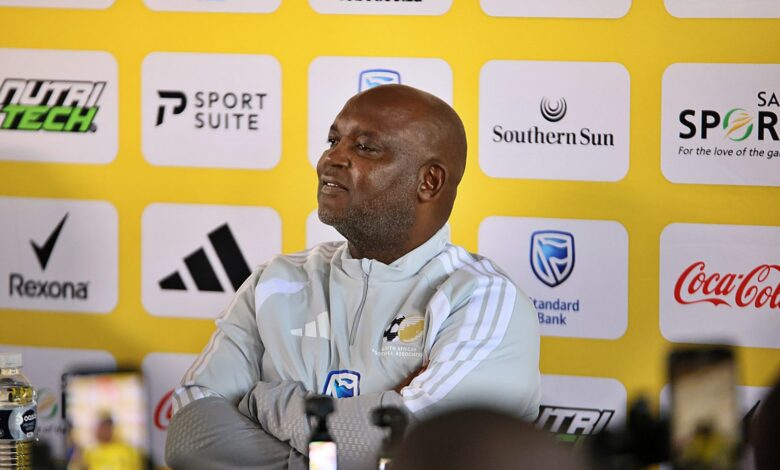
Pitso Mosimane has made it clear that he is prepared to put his reputation on the line as he attempts to build Bafana Bafana into a team capable of competing with Africa’s strongest nations. The South African coach believes the national team needs more than comfortable friendly matches that produce convincing scorelines without exposing its weaknesses. Instead, Mosimane wants Bafana Bafana to face elite opposition, with Egypt already identified as the type of challenge he wants during his second spell in charge. His approach carries an obvious risk because difficult friendlies can produce disappointing results and create additional pressure around a national team coach. Mosimane, however, has accepted that risk and believes demanding preparation is necessary if South Africa are serious about challenging the continent’s leading teams.
Mosimane returned to the Bafana Bafana job 14 years after his first spell as national team coach ended. His latest tenure comes with a clear emphasis on preparation and testing the squad against high-quality opposition. He wants South Africa to experience the intensity and tactical demands that come with facing the continent’s best teams before those challenges arrive in competitive matches. Rather than selecting opponents simply because they offer a strong possibility of victory, Mosimane believes the value of a friendly should also be measured by what it teaches the team. That philosophy could see Bafana Bafana face some of the biggest names in African football during his time in charge.
The coach has pointed to Egypt as an example of the type of opponent he wants South Africa to face. Egypt are among the most established national teams on the continent and provide a significantly different test from a lower-ranked opponent. Playing against a team of that quality can expose weaknesses in defensive organisation, ball retention, transitions and attacking execution. It can also force players to operate at a higher tempo and make decisions under greater pressure. For Mosimane, those lessons can be more valuable than a friendly victory achieved against opposition that does not provide the same level of challenge.
His approach is partly shaped by what happened during his previous tenure as Bafana Bafana coach. Mosimane recalled deliberately arranging difficult friendly matches against several of Africa’s leading teams, including Ivory Coast, Zambia and Ghana. He acknowledged that the strategy produced draws and contributed to the pressure surrounding his position at the time. Those experiences have clearly stayed with him as he prepares for his latest spell in charge. Rather than abandoning the principle because of its risks, he appears willing to use the lessons from that period when planning the current Bafana Bafana programme.
Mosimane has openly questioned whether he is repeating the same approach by choosing elite opponents for friendly matches. He understands that a series of difficult results can create a negative narrative even when the fixtures serve a specific developmental purpose. A comfortable win can often generate more immediate optimism because the scoreline provides an easy measure of progress. A heavy defeat against a stronger opponent, on the other hand, can quickly become a source of criticism. Mosimane is nevertheless willing to accept that pressure because he believes preparation should be based on the level Bafana Bafana ultimately want to reach.
The coach’s comments also reveal how he views international friendlies. For Mosimane, these matches are not simply opportunities to improve a team’s record or give players international caps. He sees them as controlled tests that can reveal whether the squad is ready to deal with the demands of top-level competition. Facing stronger opponents can expose problems that may remain hidden when a team dominates weaker opposition. Those problems can then be addressed during training before they become costly in competitive fixtures. This approach places greater emphasis on learning and preparation than on producing attractive friendly-match statistics.
The strategy is particularly relevant as South Africa prepare for the 2027 Africa Cup of Nations qualifying campaign. Bafana Bafana are scheduled to face Guinea and Eritrea in their Group D qualifiers, while an international friendly against Egypt is also part of the upcoming programme. These fixtures provide different types of challenges for Mosimane and his players. The qualifiers carry competitive importance, while the Egypt match can give the coaching staff an opportunity to assess the squad against a major African opponent. How the players respond across these matches will provide Mosimane with valuable information about the strengths and areas that still require attention.
There is also a psychological element to Mosimane’s approach. Players who regularly face high-level opposition become accustomed to dealing with difficult moments during matches. They learn how to remain organised when they do not have possession, how to respond after conceding chances and how to maintain concentration when opponents increase the pressure. These experiences can help prepare a squad for major tournaments where margins are often small. Mosimane wants Bafana Bafana to experience those situations before they reach the Africa Cup of Nations stage rather than discovering their weaknesses when the pressure is at its highest.
The coach has also made it clear that his personality plays a role in his decision-making. Mosimane described himself as someone who is willing to “fall on his sword” and accept the consequences of taking difficult decisions. He said that he believes the team needs to do things properly even when the approach may not produce immediate results. His comments show that he understands the potential consequences of arranging difficult fixtures but does not want fear of criticism to determine the team’s preparation. For Mosimane, remaining within a comfort zone would not provide the kind of development he believes Bafana Bafana require.
That philosophy could make the upcoming Egypt friendly particularly significant. The match gives South Africa an opportunity to measure themselves against a recognised African opponent while continuing to develop under Mosimane. It also creates a demanding environment for players competing for positions in the national team. Performances in such matches can provide the coaching staff with information that is difficult to obtain from training sessions alone. The result will naturally attract attention, but Mosimane’s stated objective is to use these encounters to prepare the squad for more important challenges.
Mosimane’s willingness to schedule elite friendlies ultimately reflects a broader ambition for Bafana Bafana. He wants South Africa to prepare at a level that matches the standard they hope to achieve in major African competitions. That means accepting difficult tests, learning from setbacks and using demanding matches to identify areas for improvement. His previous experience has shown him the potential consequences of that strategy, yet he remains prepared to take the same type of risk. As Bafana Bafana continue their 2027 AFCON preparations, Mosimane’s decision to pursue challenging opponents could become an important part of how he builds the team and measures its progress.