South Africa U15 Stun France 3-2 to Finish Second in FIFA U15 Boys World Cup Group A
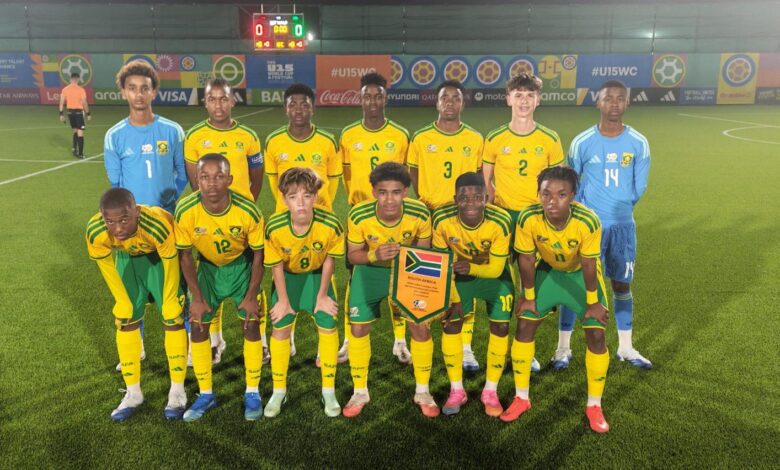
South Africa’s U15 boys national team produced an outstanding performance at the inaugural FIFA U15 Boys World Cup and Festival in Baku, Azerbaijan, defeating France 3-2 in a thrilling final group-stage match on Monday. The victory was a significant achievement for the young South African players, who showed tactical discipline, technical quality and determination against one of the tournament’s strongest teams. France had entered the encounter as Group A leaders, but South Africa refused to be intimidated by their opponents’ reputation. Despite surrendering a two-goal advantage after France converted two penalties, the South Africans found a late winner to secure all three points. The result lifted South Africa to second place in Group A and gave the team valuable momentum heading into the tournament’s next phase.
The victory over France was particularly impressive because of the way South Africa controlled important periods of the match. The young players established a 2-0 lead through effective attacking play and disciplined execution of their game plan. France responded by winning two penalties, converting both to bring the score level and put pressure on the South African defence. With the match appearing likely to end in a draw, South Africa showed composure and determination to find another goal in the closing minutes. That late strike proved decisive, securing a memorable 3-2 victory and demonstrating the team’s ability to respond when a match becomes difficult. For a developing national side competing against international opposition, the result offered an encouraging example of resilience under pressure.
South Africa finished the Group A campaign with 10 points from five matches, recording three wins, one draw and one defeat. Estonia topped the group with 11 points after completing its campaign unbeaten, while France also collected 10 points but finished behind South Africa because of the standings’ tiebreaking criteria. The South Africans scored 25 goals and conceded only five, giving them a goal difference of plus 20. France scored 20 goals and conceded six, finishing with a goal difference of plus 14. Although South Africa accumulated the same number of points as France, its superior goal difference helped secure second place. The achievement reflected the team’s attacking strength throughout the group stage, even though the defeat against Kosovo and draw against Estonia meant that it narrowly missed out on the top position.
South Africa’s group-stage results demonstrated both its attacking potential and the challenges that come with international youth football. The campaign began with an emphatic 8-0 victory over the Maldives, giving the team an ideal start to the competition. However, a 2-1 defeat against Kosovo provided an early reminder that every opponent presented a different tactical and physical challenge. The South Africans responded with a commanding 13-1 win over Anguilla before drawing 0-0 against Estonia. Their final group match against France then produced the most dramatic result of the campaign, with the late winner completing a memorable victory. Across the five fixtures, the team showed that it could score freely against some opponents while remaining competitive in more demanding encounters.
Head coach Mogale praised his players for executing their plan against France and highlighted the importance of preparation in securing the result. He explained that South Africa intended to press high and prevent France’s number eight from influencing the game. The coaching staff had also identified the distances between French players as an opportunity to win possession and attack the spaces left behind. By applying pressure in the right areas, South Africa aimed to force mistakes and move the ball forward quickly after regaining possession. Mogale believed his players followed those instructions effectively, allowing them to create opportunities while limiting France’s ability to test the South African goalkeeper from open play. His assessment underlined the importance of tactical preparation and the players’ ability to translate a game plan into action.
Mogale also highlighted the confidence shown by his players when they had possession of the ball. He praised their ability to keep the ball, rotate possession and maintain their team structure while controlling different phases of the match. According to the coach, South Africa worked hard to create its scoring opportunities rather than relying on isolated moments of individual brilliance. He viewed the performance as evidence that the team could combine technical ability with tactical discipline against opponents from established football nations. The ability to retain possession under pressure is particularly important at international level, where opponents often use speed and physical strength to disrupt attacking moves. For South Africa’s young players, the France victory offered valuable proof that disciplined preparation and confidence on the ball can produce positive results against highly regarded opposition.
The coach also reflected on the different challenges posed by South Africa’s other Group A opponents. He described Estonia as a technically capable side with strong physical attributes and good mobility, making it a difficult team to play against. Kosovo presented a different challenge, with greater emphasis on physicality despite being less technically polished in his assessment. France combined speed with physical strength, requiring South Africa to remain alert and organised throughout the match. Mogale explained that facing countries the players do not regularly encounter can take time to adjust to, especially at youth level. He nevertheless praised the way his squad represented the country and expressed confidence that the lessons learned in Azerbaijan could support their continued development.
The next stage of the FIFA U15 Boys World Cup and Festival will provide South Africa with another opportunity to test itself against international opposition. By finishing second in Group A, the team qualified for Tier B, where it will face other second-place finishers in the tournament phase. The competition structure divides teams into tiers according to their group-stage positions, creating further matches to determine final rankings. South Africa will therefore continue competing for its position within Tier B rather than entering the top tier reserved for the group winners. The tournament schedule includes a rest day on Tuesday, with matches set to resume on Wednesday. The additional recovery time will give the players an opportunity to rest, review their performances and prepare for the next challenge.
The tournament’s format places further importance on consistency because the teams will continue playing several matches during the next phase. Each side is expected to play between four and five games, depending on its progress through the relevant stages. There will be no extra time in matches that finish level at full-time, with penalty shootouts used to determine the winners. South Africa’s coaching staff will need to manage the squad carefully while maintaining the intensity and concentration that helped secure the win over France. The players will also need to recover physically and mentally from a demanding group campaign. Their ability to maintain the same standards against unfamiliar opponents could determine how far they progress in the Tier B competition.
For Mogale, the experience in Azerbaijan has also offered important lessons about coaching and player development. He explained that preparing a team for international competition involves attention to detail long before the players reach the pitch. Activities such as warm-ups, tactical briefings, match analysis and discussions with players all contribute to a team’s readiness. He described the experience as valuable because it exposed him to different approaches, organisational standards and levels of preparation. Mogale also expressed the view that more youth coaches should have opportunities to work at international level so they can gain experience and bring new ideas back into South African football. The lessons learned during the tournament could therefore benefit not only the current squad but also the broader development system when shared with other coaches and technical staff.
The coach acknowledged that the team could have collected more points during the group stage, particularly after dropping points against Kosovo and Estonia. Although he considered the overall return of three wins, one draw and one defeat encouraging, he was disappointed that the team had not taken full advantage of every opportunity. Those missed points ultimately left South Africa one point behind Estonia and outside the top tier. Nevertheless, the victory against France showed that the squad could respond positively and compete with some of the tournament’s strongest teams. The challenge now is to build on that performance without allowing the celebrations to distract from the work ahead. Mogale wants his players to continue showing character, scoring goals and producing strong performances as the competition progresses.
South Africa’s 3-2 victory over France stands as a major highlight of the team’s campaign at the inaugural FIFA U15 Boys World Cup and Festival in Azerbaijan. The young national side demonstrated attacking quality, tactical discipline and the resilience required to recover after surrendering a two-goal lead. Finishing second in Group A with 10 points and a goal difference of plus 20 represents a strong foundation for the next phase, even though Estonia claimed the group title. The experience has also provided valuable lessons for Mogale and his players as they continue developing against international opposition. With Tier B competition approaching, South Africa will have another chance to demonstrate its progress and compete for a strong final position. If the team maintains the confidence, organisation and determination displayed against France, it can use this memorable victory as a platform for further growth in youth football.