Bafana Bafana Suspension Rules Explained After Mexico Defeat Ahead of 2026 FIFA World Cup
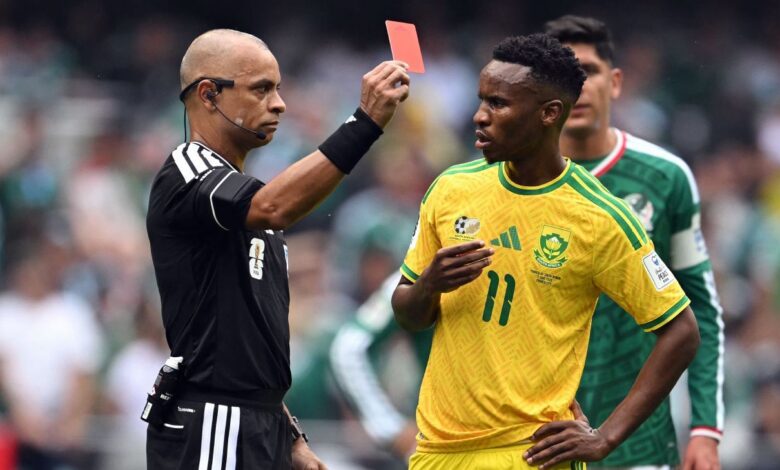
South Africa’s 2-0 defeat to Mexico has brought renewed attention to disciplinary rules at the 2026 FIFA World Cup and how they affect player availability. The match did not only expose tactical concerns for Bafana Bafana, but it also triggered important questions about suspensions, red cards and yellow card accumulation going into the next group fixtures. With the tournament format expanded to 48 teams, FIFA has adjusted certain rules to balance fairness and player participation across a longer competition. For South Africa, understanding these rules is now critical after key players were booked or sent off in a high pressure match. The situation also brings back painful memories from previous qualification errors that already cost the team valuable points and momentum.
Bafana Bafana have already faced disciplinary setbacks in the World Cup cycle, including a major incident during qualifiers where midfielder Teboho Mokoena was fielded despite being ineligible due to accumulated yellow cards. That mistake resulted in a points deduction and financial penalty, which continues to serve as a warning about strict FIFA eligibility enforcement. In the current tournament, two players once again came under scrutiny after Sphephelo Sithole and Themba Zwane received red cards in the loss to Mexico. Under 2026 FIFA World Cup regulations, a red card results in a suspension for only the next match, meaning both players remain available for South Africa’s final group stage game against South Korea on 25 June. This rule differs from older qualification systems where suspensions could extend further depending on severity and disciplinary review.
Yellow card management has become equally important for South Africa as they prepare for their remaining group matches. Players such as Teboho Mokoena and Nkosinathi Sibisi are currently on one yellow card each after the match against Mexico. The risk is clear, another booking against Czechia on Thursday would lead to suspension for the final group game against South Korea. This creates pressure on both players and coaching staff to manage aggression, timing of tackles and defensive decisions more carefully. In tournament football, one moment of caution can change squad selection for the most decisive matches. Teams often adjust their tactical approach in such situations to avoid losing key players at critical stages.
FIFA’s disciplinary structure for the 2026 World Cup introduces a more flexible system compared to previous tournaments. A key feature is the reset of yellow card accumulation after the group stage, which ensures that players do not carry early tournament cautions too deep into the knockout rounds. Once teams reach the round of 32, all single yellow cards are cleared, giving squads a fresh start. This rule is designed to prevent players from missing later stages due to minor infractions picked up early in the competition. It also helps maintain the quality of knockout matches by ensuring that star players remain available.
Another important adjustment is the second reset that occurs after the quarter-finals. At that point, any remaining single yellow cards are again wiped out, reducing the risk of players missing the semi-finals or final due to accumulation. However, FIFA maintains a strict stance on serious offences. Red cards remain fully enforced throughout the tournament with no amnesty or reset at any stage. Any player sent off will automatically miss the next match regardless of whether it is a group game or a final. This ensures that dangerous or unsporting behaviour continues to carry strong consequences.
For Bafana Bafana, these rules add both relief and pressure at the same time. On one hand, Sithole and Zwane are not expected to miss the next crucial group match due to their red cards, which gives the team continuity in selection. On the other hand, the yellow card situation places added responsibility on key players who must now balance intensity with discipline. Every foul, challenge and tactical decision could influence South Africa’s chances of progressing beyond the group stage. Coaches will need to manage rotations carefully while keeping competitiveness intact.
The road ahead requires discipline, awareness and smart game management from the entire squad. With qualification for the knockout stages still within reach, avoiding unnecessary suspensions could define South Africa’s World Cup campaign. The updated FIFA rules offer some protection for players in later rounds, but they also demand control in early matches where margins are tight. For Bafana Bafana, success will depend not only on goals and tactics but also on staying available when it matters most.