Junior Khanye Questions Refereeing Decisions After Mamelodi Sundowns Beat Orlando Pirates in MTN8 Final
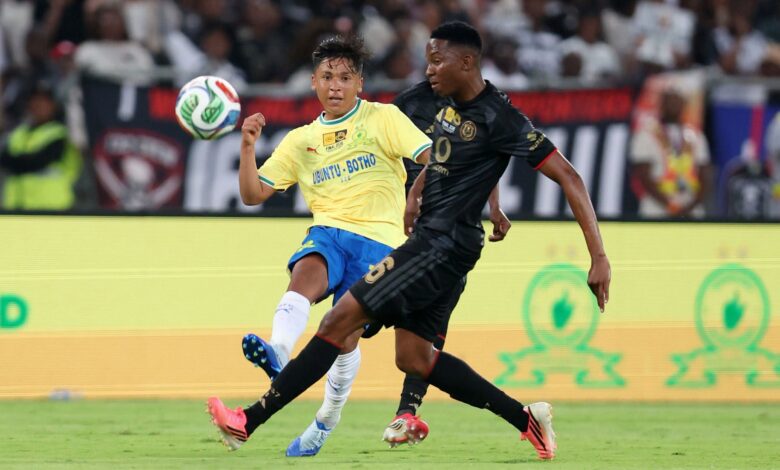
Mamelodi Sundowns ended Orlando Pirates’ recent dominance of the MTN8 with a hard-fought 2-0 victory at Moses Mabhida Stadium in Durban, but controversy surrounding the officiating has become a major talking point after the final. Goals from Teboho Mokoena and Iqraam Rayners secured the trophy for the Brazilians, denying the Buccaneers a fifth consecutive title in the competition. However, former footballer and analyst Junior Khanye has questioned the referee’s decisions, arguing that neither of the two penalties awarded during the match should have been given. His criticism has shifted attention towards the standard of officiating in one of South African football’s biggest fixtures. While Sundowns celebrated another major trophy, the disputed decisions left Pirates supporters and football observers debating whether the referee had influenced the outcome of the contest.
The 2026 MTN8 final brought together two of the strongest teams in South African football, with both Orlando Pirates and Mamelodi Sundowns determined to claim the first major cup honour of the season. Pirates entered the match hoping to extend their impressive run in the competition, while Sundowns had the opportunity to end the Buccaneers’ hold on the Wafa Wafa trophy. The atmosphere at Moses Mabhida Stadium reflected the importance of the occasion, with both sides aware that a single mistake could prove costly. Sundowns eventually found the breakthrough through Mokoena before Rayners converted a late penalty to confirm the victory. Despite the clear result on the scoreboard, the penalty decisions became a central part of the post-match discussion.
Khanye did not hide his frustration when assessing the officiating during the final. Speaking on iDiski TV, the former player argued that referees can sometimes have a negative impact on matches through questionable decisions. He specifically questioned both penalties, suggesting that the contact in each incident was insufficient to justify a spot-kick. His comments reflected his view that the referee had been too quick to penalise challenges in a match where the stakes were particularly high. However, his assessment represents an analyst’s opinion rather than an official ruling on whether the decisions were correct.
One of the incidents that attracted Khanye’s attention involved Mokoena and Orlando Pirates forward Yanela Mbuthuma. The referee awarded Pirates a penalty after judging that the Sundowns midfielder had committed a foul during the challenge. Khanye felt the contact did not warrant such a decision, arguing that Mokoena had stretched to play the ball and had not applied enough force to justify a penalty. He also suggested that he would not have awarded a free-kick even if the incident had occurred outside the penalty area. In his assessment, the contact was too soft to justify the punishment, particularly given the importance of the final.
The former footballer also questioned the penalty involving Siyanda Ndlovu, commonly known as Skwish, which helped Sundowns secure the result. During the incident, Ndlovu went down under pressure from Pirates midfielder Thapelo Mokobodi, prompting the referee to award a spot-kick to the Brazilians. Khanye disagreed with that decision, arguing that the Sundowns attacker had lost control of the ball before falling. He believed Mokobodi had read the situation and moved towards the ball, with the contact that followed not enough to constitute a foul. From Khanye’s perspective, the referee should have allowed play to continue rather than awarding a penalty at such a decisive stage of the match.
The controversy highlights the difficulty of judging physical challenges in football, especially when incidents occur inside the penalty area. Referees must determine whether contact has unfairly impeded an opponent, whether a player has committed an offence and whether the incident warrants a penalty. These decisions can be particularly difficult when players move at speed and several actions occur within a short period. Contact alone does not automatically mean a foul has occurred, but referees must also consider whether a challenge has affected an opponent’s ability to play the ball. Khanye’s criticism reflects the wider debate about consistency and the interpretation of penalties in high-pressure matches.
The two penalty decisions also shaped the narrative surrounding an otherwise significant result for Sundowns. Mokoena’s contribution helped the Brazilians establish an advantage, while Rayners’ late penalty ensured they finished the match with a two-goal victory. For Pirates, the result ended their hopes of winning the MTN8 for a fifth consecutive season and represented a painful setback in their pursuit of silverware. The Buccaneers had built a strong reputation in the competition, making the defeat especially difficult for their players and supporters. Nevertheless, the controversy does not change the official result, and Sundowns remain the winners of the 2026 MTN8 final.
For Mamelodi Sundowns, the victory represents a major achievement against one of their most competitive domestic rivals. The club demonstrated its ability to compete in a high-pressure cup final and take advantage of decisive moments. Winning the MTN8 also adds to the significance of the occasion for the players and coaching staff, who will want to use the success as a foundation for the rest of the campaign. However, the debate over the penalties means the celebrations have unfolded alongside questions about the officiating. Sundowns can take satisfaction from lifting the trophy while recognising that the disputed incidents will remain part of the discussion surrounding the final.
Orlando Pirates, meanwhile, must turn their attention towards their remaining domestic and continental commitments. Losing a major final is difficult for any team, particularly when controversial decisions become part of the post-match conversation. The Buccaneers will need to review their performance, assess the moments that influenced the contest and focus on improving their results in upcoming fixtures. Although Khanye’s comments may reflect concerns shared by some Pirates supporters, the team cannot afford to allow the disappointment to define its season. Maintaining consistency and responding positively on the pitch will be essential as the club pursues its other objectives.
Khanye’s criticism has added another layer to the discussion surrounding the 2026 MTN8 final, with the two penalty decisions likely to remain subjects of debate among South African football fans. His view is that neither incident justified a spot-kick, but that opinion should be distinguished from the referee’s on-field decisions and the official outcome. The final ultimately belonged to Mamelodi Sundowns, who secured a 2-0 victory and ended Orlando Pirates’ run of MTN8 titles. Yet the controversy has also renewed questions about penalty decisions, refereeing consistency and the role officials play in shaping major matches. Sundowns will celebrate their triumph, while Pirates must regroup, but the debate over the officiating is likely to remain an important part of the final’s legacy.