Nqaba Xulu Explains Intense Press That Led to Kaizer Chiefs Goal
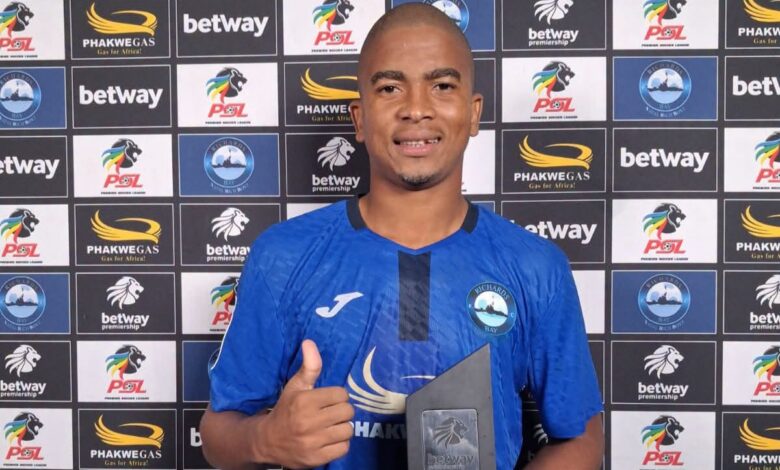
Richards Bay striker Nqaba Xulu has explained the thinking behind his intense press on Kaizer Chiefs goalkeeper Brandon Petersen that resulted in a crucial goal during Wednesday evening’s 2-2 draw at Princess Magogo Stadium. The match produced an entertaining contest in difficult rainy conditions, with both sides showing attacking intent despite the slippery surface. Richards Bay took advantage of a costly mistake from the Chiefs goalkeeper before the Soweto giants fought back to secure a point. Xulu played a central role in the result by scoring twice, while Lebo Maboe and Siphesihle Ndlovu found the net for Kaizer Chiefs. The result proved costly for Chiefs in the Betway Premiership title race as they dropped valuable points against a Richards Bay side that entered the match searching for a much-needed victory.
The opening goal became one of the most discussed moments of the match because it followed a mistake from Petersen under pressure. The Kaizer Chiefs captain received the ball while his team attempted to play out from the back, but Xulu immediately closed him down and recognised an opportunity to win possession. With the pitch soaked by rain, the Richards Bay forward anticipated that the ball would move quickly if Petersen took an additional touch. Xulu’s decision to continue his press forced the goalkeeper into an error when he attempted to clear the danger. The striker then capitalised on the situation and converted the opportunity, giving Richards Bay an early advantage and highlighting the value of an aggressive and well-timed press.
Speaking to SuperSport TV after the match, Xulu made it clear that his decision was not simply a spontaneous attempt to chase down the goalkeeper. He explained that Richards Bay had worked on pressing situations before the game and that the players understood when they needed to apply pressure. According to the striker, the conditions at Princess Magogo Stadium played an important role in his decision to accelerate towards Petersen. He believed that the wet surface would make the ball travel away from the goalkeeper if Petersen took a touch, creating a narrow window for him to reach the ball first. His reading of the situation ultimately paid off, allowing Richards Bay to turn a planned tactical approach into a goal.
Xulu’s explanation also provides important context to what initially appeared to be an individual mistake by Petersen. Pressing from the front requires attackers to assess several factors within seconds, including the goalkeeper’s body position, the speed of the pass, the condition of the pitch and the available passing options. In this case, Xulu identified the wet playing surface as an advantage and adjusted his approach accordingly. Rather than simply running towards Petersen without a clear plan, he recognised that an extra touch could make the goalkeeper vulnerable. That combination of preparation, awareness and timing allowed the Richards Bay striker to turn pressure into a decisive attacking opportunity.
The goal was particularly significant because it exposed one of the difficulties Chiefs faced when attempting to build attacks from deep. Goalkeepers often become the first point of attack when opponents press high, especially when the team in possession tries to maintain a short passing structure. A mistake in that area can immediately place the defending team under pressure because there are usually fewer players between the goalkeeper and the opposition goal. Xulu understood this risk and chose to attack the situation rather than allowing Petersen time to recover. His decision demonstrated how an organised pressing strategy can create chances even without sustained possession in the final third.
The match itself developed into an intense battle as Chiefs attempted to recover from the early setback. Richards Bay had the advantage of Xulu’s goals, but Kaizer Chiefs showed resilience by responding with goals from Maboe and Ndlovu. The Soweto club eventually secured a 2-2 draw, preventing Richards Bay from claiming all three points at home. Despite the comeback, Chiefs could not take full advantage of the result in the context of the Betway Premiership title race. The dropped points allowed rivals Orlando Pirates to maintain an advantage at the top end of the standings, while Chiefs also slipped behind Mamelodi Sundowns into third position.
For Richards Bay, the draw extended a difficult run of form, with the club now having gone four matches without a victory. The Natal Rich Boyz collected their third draw of the season and moved up to 12th place on the league table. While the result did not end their winless run, earning a point against one of the league’s biggest clubs provided some positives for the team. Xulu’s performance will also give the coaching staff encouragement as the striker demonstrated his ability to create opportunities through intelligent movement and pressing. His two goals ensured that Richards Bay remained competitive throughout a match that could easily have slipped away after Chiefs mounted their comeback.
Petersen’s error will naturally attract attention because goalkeeping mistakes often have an immediate impact on the result, but Xulu’s explanation shows why the incident should also be viewed from the perspective of the attacking team. The striker did not simply benefit from an unforced mistake, as his pressure contributed directly to the situation that caused the error. His awareness of the wet conditions gave him confidence that he could close the goalkeeper down before the ball moved beyond his reach. This highlights the importance of attackers remaining switched on even when possession appears to be under the control of the opposition. A well-executed press can force mistakes that would not necessarily occur when a goalkeeper has time and space to make a decision.
The incident could also influence how opponents approach Richards Bay in future matches. Xulu has shown that he is prepared to press aggressively when he identifies a weakness in the opposition build-up. Goalkeepers and defenders facing Richards Bay may therefore need to pay closer attention to their first touch and the speed of their decisions when attempting to play from the back. For Richards Bay, the ability to turn defensive pressure into attacking chances can provide an important weapon during the remainder of the campaign. The team will need more performances of this nature if it hopes to move away from the lower reaches of the Betway Premiership standings.
Kaizer Chiefs, meanwhile, will need to address the defensive and concentration issues that contributed to another frustrating result. Although the team showed character by recovering from two goals down, conceding after losing possession under pressure exposed a vulnerability that opponents can target. The draw means Chiefs missed another opportunity to strengthen their position near the top of the table. Their response in the next league fixture will therefore be closely watched as they attempt to remain in contention while improving their consistency. Chiefs are scheduled to face Siwelele FC at Royal Bafokeng Stadium in the North West on 5 September, giving the club an opportunity to respond on the field.
Nqaba Xulu’s explanation ultimately adds another layer to a match that produced plenty of talking points for both Richards Bay and Kaizer Chiefs supporters. His first goal was not only the result of a goalkeeper’s mistake but also the product of a deliberate pressing plan and his ability to recognise how the wet conditions could work in his favour. The striker’s two-goal performance ensured that Richards Bay remained in the contest and secured a valuable point against one of South Africa’s most prominent clubs. For Chiefs, the result represents two points dropped in the race near the top of the Betway Premiership table, while Richards Bay can take encouragement from the competitiveness they showed. Xulu’s comments underline how preparation, timing and quick decision-making can turn a pressing situation into a match-defining moment.