Kenya vs South Africa AFCON Qualifier Preview: How to Watch Bafana Bafana, Kick-Off Time, Venue, Squad News, Form and Predictions
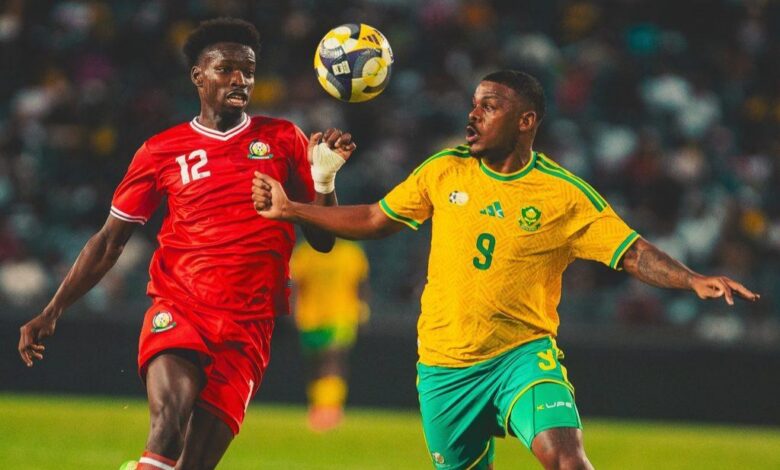
Kenya and South Africa are preparing for another important meeting as they face each other in their Africa Cup of Nations qualifying campaign on Tuesday, 17 November 2026. The encounter promises an interesting contest between two teams with different ambitions and plenty to prove after their previous meeting ended in a 2-2 draw in Johannesburg. South Africa, better known as Bafana Bafana, will be looking to respond with a stronger performance and secure a valuable result away from home. Kenya, meanwhile, will hope to use home advantage to build on their encouraging performance in the first match. With qualification pressure increasing, the return fixture at Nyayo National Stadium in Nairobi could have a significant impact on the teams’ campaign.
The match is particularly important for South Africa because the dropped points in Johannesburg have made their qualification situation more complicated. Bafana Bafana had opportunities to take control of the first encounter but failed to turn their possession and attacking football into a winning result. Kenya showed determination and attacking quality to earn a draw against a team that entered the fixture with higher expectations. The result has increased the importance of the second meeting, especially with Guinea also involved in the qualification picture. Both sides understand that another disappointing performance could create further problems as the competition approaches its decisive stages.
The return fixture will take place at Nyayo National Stadium in Nairobi, where Kenya will enjoy the support of their home supporters. The match is scheduled for Tuesday, 17 November 2026, with kick-off at 19:00 East Africa Time, which is 18:00 South African Standard Time. South African viewers can watch the match live on SABC 2. The game is also expected to attract considerable interest from football supporters across the continent because of the rivalry between the two national teams. Supporters will be watching closely to see whether Bafana can recover from their late disappointment in Johannesburg or whether the Harambee Stars can produce another strong performance.
The first meeting between the teams took place at Orlando Stadium in Soweto on Friday, 13 November 2026. South Africa and Kenya played out an entertaining 2-2 draw after both sides found the net twice. Bafana initially took the lead through an own goal by Kenyan defender Amos Wanjala in the ninth minute. Kenya responded through captain Michael Olunga, who converted a penalty shortly before half-time after Thabang Matuludi was penalised for handball. South Africa regained the advantage in the 77th minute when Relebohile Mofokeng finished an attacking move involving Lyle Foster. However, Ryan Ogam scored a late equaliser to deny the hosts all three points and give Kenya a valuable result ahead of the return fixture.
The late equaliser exposed one of South Africa’s biggest concerns, their ability to maintain concentration when defending a lead. Bafana had controlled important periods of the match and created opportunities to extend their advantage. However, Kenya remained competitive and took advantage of a defensive mistake in the closing stages. The result highlighted the importance of converting chances and maintaining defensive discipline throughout the full 90 minutes. South Africa will need to address those weaknesses if they want to leave Nairobi with a positive result.
South Africa’s qualification position remains a major talking point ahead of the Nairobi encounter. Following the 2-2 draw, Bafana Bafana remained top of Group D with seven points from three matches, while Guinea were close behind with six points. Kenya had two points and Eritrea had one point at that stage of the campaign. Kenya have already secured their place at the 2027 Africa Cup of Nations as co-hosts, meaning their main objective in these fixtures is to build a competitive team and improve their results. For South Africa, however, the remaining matches carry considerable importance because they need to finish ahead of their rivals for the additional qualification place available in the group.
Pitso Mosimane will be under pressure to ensure that his team responds positively after dropping points at home. The Bafana Bafana coach has emphasised that playing attractive football and enjoying possession will not guarantee victories unless the team converts its chances. Following the first match, Mosimane made it clear that his players needed to become more clinical in front of goal. He also acknowledged that the result was disappointing but insisted that South Africa’s qualification ambitions remained within their control. His immediate challenge will be to improve the team’s attacking efficiency while ensuring that the defensive mistakes that cost them victory in Soweto do not happen again.
South Africa have several attacking players capable of making a difference in Nairobi. Relebohile Mofokeng remains one of the most exciting players in the squad because of his creativity, movement and ability to find space around the opposition penalty area. His goal in the previous match demonstrated his attacking quality and ability to deliver during important moments. Lyle Foster also offers an important option because of his physical presence, movement and ability to link up with other forwards. Oswin Appollis provides additional attacking creativity, while Iqraam Rayners gives Mosimane another option in the final third. Teboho Mokoena’s ability to control midfield and contribute with long-range passing will also be important if Bafana want to dictate the tempo.
Ronwen Williams is expected to play an important role between the posts for South Africa. His experience and leadership make him a valuable member of the national team, particularly in difficult away fixtures. The defensive department will also need to improve its communication and concentration after conceding a late equaliser in the previous encounter. Players such as Olwethu Makhanya and other members of the defensive unit will have to remain alert against Kenya’s attacking threats. Thabang Matuludi and the wider defensive group will also need to avoid unnecessary mistakes around their penalty area. South Africa cannot afford to give the home side easy opportunities if they want to secure maximum points.
Kenya will approach the match with confidence after demonstrating their ability to compete against South Africa in Johannesburg. Benni McCarthy has been working to develop a competitive Harambee Stars team with a stronger attacking mentality and greater belief against established African opponents. The former South African international understands the strengths and weaknesses of Bafana Bafana and will be familiar with several of the players he faces. His knowledge of South African football could prove useful when preparing his team for the return fixture. Playing in front of a home crowd should also provide additional motivation for the Kenyan players.
Michael Olunga will be one of Kenya’s most important players in the attacking department. The experienced striker offers physical strength, intelligent movement and a proven ability to score goals at international level. His successful penalty in the first meeting demonstrated his importance to the team. Ryan Ogam will also attract attention after scoring the late equaliser that rescued a draw for Kenya in Soweto. His pace, confidence and ability to exploit defensive spaces could create problems for South Africa. Kenya will need their attacking players to remain organised and take advantage of any opportunities that come their way.
The Kenyan midfield will have an important responsibility in preventing South Africa from controlling possession. Bafana are comfortable moving the ball through midfield and using technically gifted players to create attacking opportunities. Kenya must therefore apply pressure at the right moments without leaving too much space behind their defensive line. Their defenders will also need to remain disciplined when dealing with Mofokeng, Foster and Appollis. The home side could benefit from using quick transitions to catch South Africa out of position. If Kenya can maintain their defensive organisation and attack with purpose, they have the potential to make the contest difficult for the visitors.
The recent form of both teams provides an interesting indication of what supporters can expect. South Africa entered the first meeting with a record of a draw, three wins and one defeat in their previous five matches. That run reflected the progress Bafana had made under Mosimane and their growing confidence in international competition. However, the 2-2 draw against Kenya showed that the team still has areas that require improvement. Kenya’s previous five-match record included a draw, another draw, two defeats and a victory. Their performance in Johannesburg offered encouragement, particularly because they managed to recover from losing positions and score a late equaliser. The Harambee Stars will hope to carry that fighting spirit into their home fixture.
The head-to-head record between Kenya and South Africa generally favours Bafana Bafana. South Africa have enjoyed several positive results in previous meetings, including a 2-0 victory in February 2011 and a 2-1 win in October 2012. Kenya have also had competitive moments against their southern African opponents, including a penalty shootout victory in the 2002 Castle Lager Cup. The latest 2-2 draw adds another interesting chapter to the history between these teams. Although historical results suggest that South Africa have the stronger record, the first match showed that Kenya are capable of challenging Bafana when they play with confidence and organisation. The return fixture could therefore be another closely contested encounter.
Team selection will be another important factor ahead of kick-off. Mosimane must decide whether to retain most of the players who started the previous match or introduce fresh options to improve the team’s attacking effectiveness. Relebohile Mofokeng, Teboho Mokoena, Ronwen Williams and Oswin Appollis are among the players who could play important roles if selected. Lyle Foster’s contribution as a substitute in Johannesburg also gives the coach a useful attacking option. Kenya will similarly look to balance experience and energy, with Olunga and Ogam among the players who could influence the outcome. Supporters should check the official team announcements before kick-off because the confirmed starting line-ups and any late injury or suspension updates may differ from the previous fixture.
For South African supporters, the Kenya vs South Africa match will be available live on SABC 2 on Tuesday, 17 November 2026. The scheduled kick-off is 18:00 South African time, corresponding to 19:00 in Nairobi. The match will take place at Nyayo National Stadium in Kenya’s capital city. Viewers should check their local television schedules for any last-minute broadcast changes. Football supporters who cannot watch the live television broadcast can follow the match through available live score services and official national team updates.
The prediction for this encounter slightly favours South Africa despite Kenya’s home advantage. Bafana have a stronger recent record and possess several technically gifted players who can influence the game in the final third. Their biggest challenge will be turning possession into clear scoring opportunities while remaining defensively disciplined. Kenya will be encouraged by their comeback in the previous match and will look to use the home crowd to their advantage. A draw is certainly possible if the Harambee Stars maintain the organisation they displayed in Soweto. However, South Africa have enough attacking quality to create problems for the Kenyan defence if they perform closer to their potential.
The available pre-match prediction model gives South Africa a 59 per cent chance of winning, compared with a 28 per cent probability of a draw and a 13 per cent chance of a Kenya victory. These figures represent estimated outcomes rather than guaranteed results. The previous 2-2 encounter demonstrated why football predictions should be treated with caution, particularly when two teams have already shown that they can compete closely against each other. Kenya’s attacking confidence and home advantage could make the difference if South Africa struggle to control the match. Nevertheless, Bafana’s greater squad depth and attacking experience give them an advantage on paper.
A narrow South African victory is a reasonable prediction, with a 2-1 result in favour of Bafana Bafana offering a possible outcome. Mofokeng and Foster could be important players if South Africa create enough opportunities in the attacking third. Kenya, however, have demonstrated that they can punish defensive mistakes, making it difficult to predict a comfortable away victory. Mosimane’s players must show greater composure in front of goal and avoid conceding late opportunities. McCarthy will expect his team to compete aggressively and make the most of its home support.
The Kenya vs South Africa AFCON 2027 qualifier promises another competitive meeting between two ambitious national teams. Bafana Bafana will travel to Nairobi knowing that a victory would strengthen their position in the race for qualification and restore confidence after the disappointing draw in Johannesburg. Kenya will aim to build on their encouraging performance and give their supporters a result to celebrate at Nyayo National Stadium. The contest will also provide another interesting coaching battle between Pitso Mosimane and Benni McCarthy. With attacking quality on both sides and important points at stake for South Africa, supporters can expect an engaging international football encounter. Bafana have the advantage on paper, but they will need to demonstrate their quality on the pitch to leave Nairobi with the result they want.