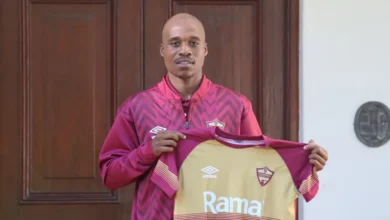
Mbekezeli Mbokazi Set for 2026 FIFA World Cup Spotlight as Young Bafana Bafana Defender Faces Global Rising Stars
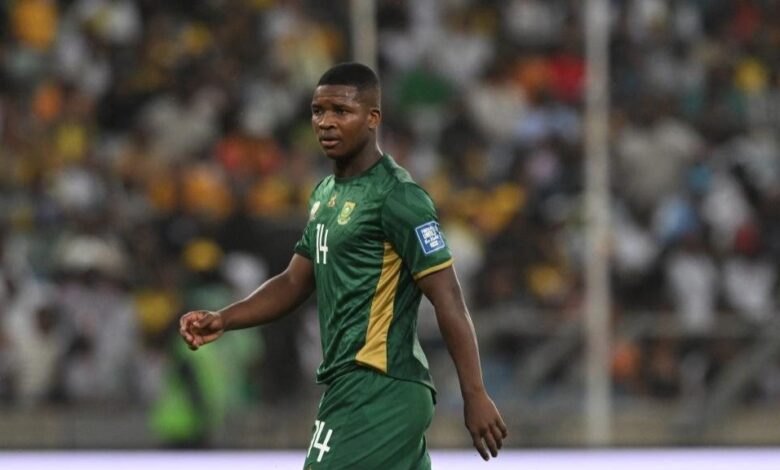
The 2026 FIFA World Cup will introduce a new generation of football talent to the global stage, and South Africa’s Mbekezeli Mbokazi will arrive as one of the most intriguing young defenders in the Bafana Bafana squad. Still only 20 years old and turning 21 in September, Mbokazi is already a key figure in South Africa’s defensive structure. He enters the tournament as the first-choice left-sided central defender, a role that highlights both his rapid development and the trust placed in him by the national team setup. Despite his youth, he will not be the youngest player at the tournament, as more than 30 players across the competition will be younger than him. That reality places his career stage in perspective, showing how early modern footballers are now reaching elite levels.
Mbokazi’s rise has been shaped by his performances in both domestic and international football, as well as his recent move to Major League Soccer with Chicago Fire. Since joining the American club in February, he has already featured in 14 matches, gaining valuable experience in a competitive environment outside South Africa. His performances have not gone unnoticed, with his market value reportedly rising to around USD 3 million, which is approximately R50 million. That increase reflects growing confidence in his potential as a long-term defensive asset for both club and country. His development trajectory places him among the most promising young defenders in African football.
While Mbokazi represents South Africa’s next defensive pillar, the World Cup will feature an even younger generation of players competing on the same stage. One of the most talked-about emerging talents is Mexico’s Gilberto Mora, who will still be a teenager during the tournament and has already made waves in international football. Mora, who plays for Club Tijuana, could even face Mbokazi if fixtures align in the group stage. The generational contrast highlights how football continues to evolve, with teenagers now playing alongside established professionals at the highest level. The possibility of direct matchups between players at such different stages of development adds another layer of interest to the tournament.
The age distribution across the World Cup squads is unusually wide, with more than 25 years separating the oldest player from the youngest. Scotland’s Craig Gordon enters the tournament at 43 years old, representing one extreme of experience and longevity in football. At the opposite end of the spectrum, players like Mora are just beginning their professional journeys. This contrast creates a unique dynamic where experience and youth collide on football’s biggest stage. For players like Mbokazi, it means competing in an environment where every opponent brings a different level of maturity and playing style.
Among African nations, several young players will also be younger than Mbokazi, many of whom are already based in top European clubs. Egypt’s Hamza Abdelkarim, just 18 years old, is already linked with Barcelona and is considered one of the continent’s most exciting attacking prospects. Senegal also contribute to this youthful wave, with players such as Ibrahim Mbaye at Paris Saint-Germain and Bara Sapoko Ndiaye at Bayern Munich, both aged 18. These players represent a growing trend of African teenagers joining elite European academies early in their careers. Their presence at the World Cup signals a shift in how young talent is being developed and integrated into top-level football.
North and West Africa continue to produce a strong pipeline of young players competing in Europe’s top leagues. Algeria’s Ibrahim Maza, aged 20, is developing at Bayer Leverkusen and is already gaining recognition for his technical ability and maturity. Morocco’s youth group includes Ayyoub Bouaddi at Lille along with Samir El Mourabet and Gessime Yassine at Strasbourg, all of whom are still in their early twenties. Ivory Coast also boasts a strong group of young talent, including Yan Diomande at RB Leipzig and Bazoumana Toure at Hoffenheim, both already competing in Germany’s top division. These players highlight the depth of African talent emerging across multiple leagues.
The broader picture shows that Mbokazi is part of a generation where early exposure to elite football is becoming standard. While he is not the youngest player at the tournament, his role as a starting defender for South Africa places him in a high-pressure position that many younger players will not yet experience. His move to MLS has accelerated his development by exposing him to different tactical systems and physical demands. That experience will be critical when facing world-class attackers on football’s biggest stage. For Bafana Bafana, his stability at the back will be central to their defensive approach.
As the World Cup approaches, Mbokazi’s journey reflects both the promise and pressure of modern football development. He stands between generations, older than football’s youngest prodigies but still early in his own career. The tournament will test his ability to compete against experienced veterans and emerging teenage stars at the same time. His performances will help define South Africa’s defensive strength on the global stage. Regardless of outcome, his presence at the World Cup marks him as one of the key young African defenders to watch in the years ahead.