Teboho Mokoena Reflects on Bafana Bafana’s Painful World Cup Exit After Late Canada Defeat
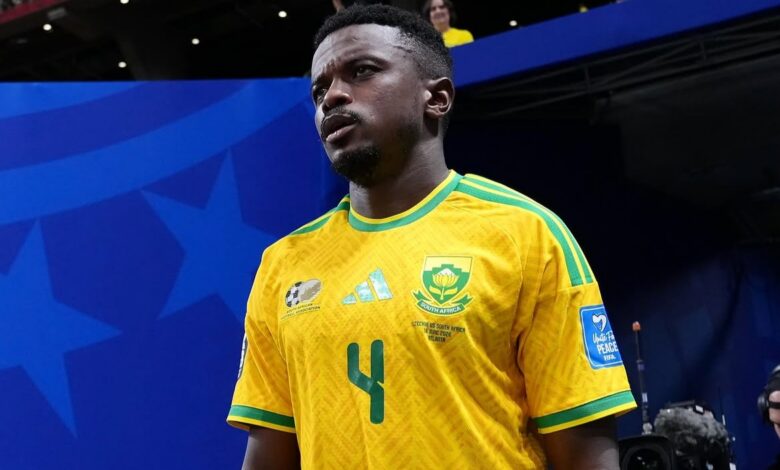
Bafana Bafana midfielder Teboho Mokoena has shared a raw and honest account of the mood inside the camp following their dramatic exit from the 2026 FIFA World Cup. The South African national team saw their historic run end in the Round of 32 after a 1-0 defeat to Canada, decided by a stoppage-time goal. The result hit hard because Bafana Bafana had controlled large parts of the match but failed to turn dominance into goals. Mokoena described a dressing room filled with silence and disappointment after the final whistle. The loss ended a campaign that had already made history for South African football.
The match itself showed a clear contrast between possession and productivity. Under head coach Hugo Broos, Bafana Bafana held 58 percent of the ball but managed only one shot on target. That lack of sharpness in the final third proved costly when Canada struck in the 92nd minute through Stephen Eustáquio. The goal came at a moment when South Africa looked set to push the game into extra time. Instead, it ended their tournament in painful fashion at the knockout stage.
Bafana Bafana had entered the match with confidence after a strong group stage performance. Their biggest achievement came in a 1-0 win over South Korea, which secured qualification for the knockout rounds for the first time in their history. That result lifted expectations and showed that the team could compete at the highest level. However, the Round of 32 match exposed key weaknesses in creativity and finishing. The team struggled to convert possession into clear scoring opportunities when it mattered most.
Team selection also played a role in shaping the outcome. Broos made one change to the starting lineup, bringing Mokoena back after suspension. However, the side still missed the influence of Themba Zwane, who served a three-match suspension after his opening game red card against Mexico. Without his control in midfield, South Africa lacked rhythm and progression between defence and attack. Attempts to adjust the system, including changes involving Relebohile Mofokeng and Thalente Mbatha, did not produce the desired impact.
As the match progressed, Bafana Bafana dropped deeper into a defensive shape to protect their draw. The low block worked for long periods but eventually broke under pressure in stoppage time. Canada’s late goal punished South Africa’s inability to sustain attacking threat in the second half. Mokoena pointed out that at elite level, small moments decide outcomes. He noted that opponents did not create many chances, but they made theirs count.
Inside the dressing room, emotions were heavy and conversations were minimal. Mokoena described a group that felt pride in their historic achievement but frustration over how the tournament ended. The players knew they had made progress by reaching the knockout stage for the first time. At the same time, the manner of elimination left a lasting sense of what could have been. The balance between achievement and disappointment defined the team’s reaction.
The campaign will still be remembered as a turning point for South African football. Bafana Bafana showed they can compete beyond the group stage on the world’s biggest stage. The experience highlighted both progress and areas that still need improvement, especially in attack and game management. Mokoena’s reflections underline the fine margins at World Cup level, where one moment can change everything. The defeat to Canada ended the journey, but the lessons from the tournament will shape the team’s future direction.