Pitso Mosimane Comments On Twitter After Being Snubbed For CAF Awards
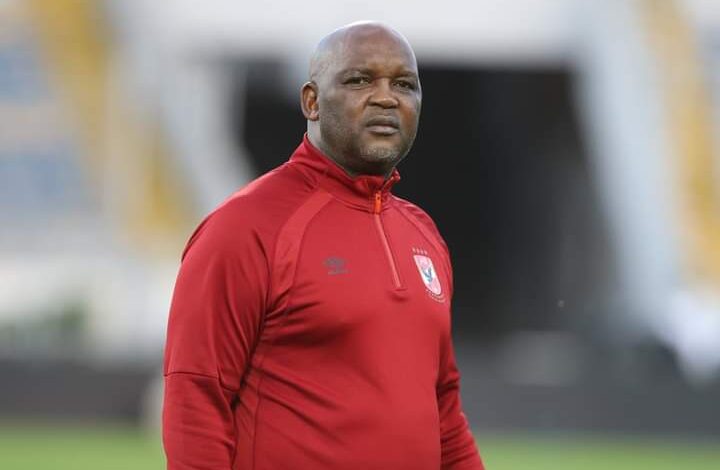
Pitso Mosimane didn’t make the final cut for the CAF Coach of the Year award category where two other South African coaches made the final shortlist.
A football journalist who’s also a fan of Mosimane on Twitter expressed his sadness after not seeing the name of the former Al Ahly coach in the list that was announced by CAF yesterday. He said, “Really sad to see Pitso Mosimane didn’t make the final cut for the CAF Coach of the Year award. Thoughts everyone.”
Then Mosimane replied and said he didn’t expect to win the award as he got bronze at FIFA Club World Cup and silver at CAF Champions League. “Honestly, I should do better. I can’t expect to be bronze (FIFA Club World Cup ), silver (CAF CL) medalist and win. But my daughter already gave me the award for winning the same FIFA bronze & CAF Super Cup & Champions League( 2x in a row nogal) in the absence of Caf awards,” Mosimane tweeted.
READ ALSO: CAF reveals top three final list of nominees ahead of CAF Awards on Thursday
He went on to say Banyana Banyana coach Desiree Ellis is representing the country and should win the award. The other South African coach nominated is Jerry Shabalala of Mamelodi Sundowns Ladies who won Women’s CAF Champions League with Banyana Bastyle last season. “As long Desiree Ellis collects her Award, she represents all of us in SA,” Mosimane continued.
MOSIMANE SENDS HUNT A MESSAGE AFTER GETTING SUPERSPORT UNITED GIG
Pitso Mosimane has sent Gavin Hunt a message after he was announced as the new head coach of SuperSport United.
Hunt’s feet had been itching to walk on the touchline after a long period of unemployment following the sacking by Chippa United last year.
Hunt was unveiled as Matsatsantsa’s coach earlier this month and has begun his second stint with the club he left in 2013. Mosimane who has been a long-term rival of Hunt in the league took to social media to wish him well ahead of the upcoming season.
“Out of 4 PSL titles you won 3 were achieved at SuperSport FC,” he wrote on social media. “Top Coaches will always rebound strongly. Don’t be shy to dust off that old book that won those trophies. Enjoy yourself.”
READ ALSO: WATCH! MaMkhize And Andile Mpisane Show Up In Style At COSAFA Cup Final
In his first run with the Pretoria-based club, Hunt won the league three times and Nedbank Cup once. And the last time SuperSport lifted a silverware was in 2019 when they won MTN 8.