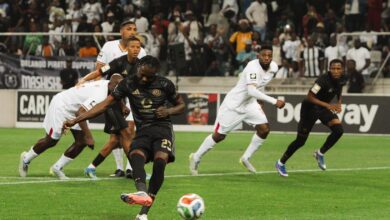
Edward Motale Points to Chemistry as Key Behind Bafana Bafana’s World Cup Breakthrough

Former Bafana Bafana defender Edward Motale believes the team’s historic progress at football’s biggest stage comes down to one simple factor: chemistry. South Africa has advanced to the Last 32 of the FIFA World Cup after a 1-0 win over Republic of Korea, a result that confirmed their place in the knockout rounds for the first time in history. The achievement under head coach Hugo Broos has triggered widespread discussion about what has made this squad different from previous editions. For Motale, the answer is not complicated, as he believes strong player combinations built over time have created a stable and effective unit. His analysis focuses on familiarity, structure and trust between players who already understand each other’s movements.
Motale argues that the foundation of Bafana Bafana’s success lies in existing partnerships between players who regularly feature together at club level. He says this natural understanding has made it easier for the national team to build cohesion quickly during international duty. At the back, he highlighted combinations involving Mamelodi Sundowns players such as Khuliso Mudau and Aubrey Modiba, who already share strong chemistry on the pitch. He also pointed to the integration of younger defenders like Mbekezeli Mbokazi, who fits into a system that is already familiar with structured defensive patterns. According to Motale, this continuity has reduced errors and improved decision-making in high-pressure matches.
In midfield, Motale sees another layer of strength built through shared club experiences, particularly among players from Orlando Pirates and Mamelodi Sundowns. He explained that these midfield relationships allow the team to maintain rhythm and control during matches. He specifically mentioned Teboho Mokoena as a player who adapts easily to different partners, whether playing alongside Tshepang Moremi, Thalente Mbatha or Oswin Appollis. This flexibility, according to Motale, ensures that the team does not lose structure even when personnel changes are made. It also allows Bafana Bafana to maintain consistency in both attacking build-up and defensive transitions.
Motale also believes the attacking department benefits from the same principle of familiarity and tactical understanding. He noted that head coach Hugo Broos has been able to rotate forwards without disrupting the team’s overall shape. Players such as Evidence Makgopa, Iqraam Rayners and Lyle Foster bring different qualities but operate within a shared tactical framework. This allows the team to adapt to different opponents while maintaining a consistent style of play. Motale emphasised that this flexibility has been crucial in tight World Cup matches where small details decide outcomes.
A key example of this system working effectively, according to Motale, is the role played by Makgopa in the attacking structure. He explained that Makgopa contributes even when he does not score by creating space and drawing defenders out of position. This movement allows other attackers to exploit gaps and increase scoring opportunities. Motale described this as an important but often overlooked aspect of team performance. He believes such tactical discipline is what separates well-organised teams from inconsistent ones at international level.
As South Africa prepares for the next stage of the tournament, Motale believes the team’s chemistry will become even more important. The knockout rounds are expected to be more demanding, with stronger opponents and fewer chances to recover from mistakes. However, he argues that the existing understanding between players gives Bafana Bafana a competitive edge. The squad’s ability to rely on established partnerships could help them remain calm under pressure. For Motale, this unity is not accidental but the result of consistent selection and long-term development.
The historic qualification over Republic of Korea has already changed expectations around Bafana Bafana’s World Cup campaign. Under Hugo Broos, the team has shown discipline, structure and growing confidence in key moments. Motale’s assessment adds another layer to that success by highlighting the importance of chemistry across all areas of the pitch. As the team moves forward, that connection between players may continue to define their progress. For South African football, the message is clear: familiarity and unity are driving a new era on the world stage.