Pitso Mosimane Dismisses Fatigue Concerns Over Oswin Appollis as Bafana Bafana Prepare for Kenya AFCON Qualifiers
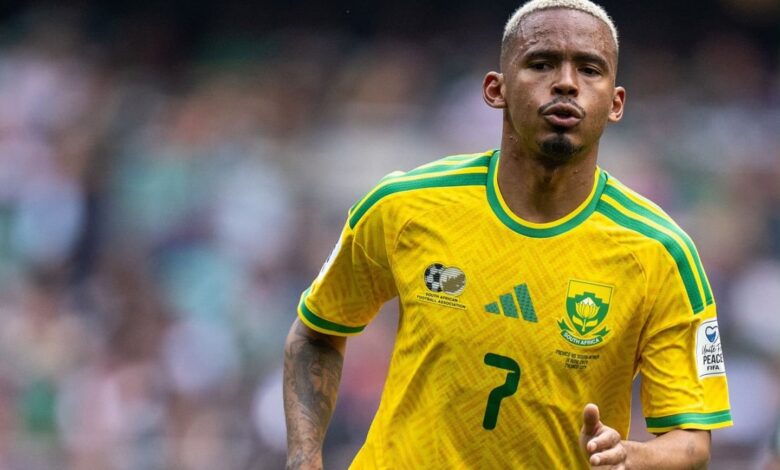
Bafana Bafana coach Pitso Mosimane has made it clear that he will select players based on their ability, availability and performances in training, rather than concerns about managing their workload at club level. His comments come amid questions about Orlando Pirates winger Oswin Appollis and the decision by his club coach, Abdeslam Ouaddou, to manage the attacker’s playing time to prevent fatigue. Ouaddou recently described Appollis as “not a robot” while explaining the need to manage his workload during a demanding Betway Premiership campaign. However, Mosimane believes the situation is different at international level, where South Africa play relatively few matches throughout the year. The Bafana Bafana coach is therefore prepared to use Appollis whenever he believes the winger is fit and capable of contributing to the national team.
The discussion surrounding Appollis comes as South Africa prepare for two important 2027 Africa Cup of Nations qualifying matches against Kenya. The first encounter is scheduled to take place at Orlando Amstel Arena, with the two teams set to meet again in the return fixture. These matches present Mosimane with an opportunity to assess his squad and continue building consistency within the national team. Appollis is among the players included in the latest Bafana Bafana selection and could play an important role in the team’s attacking plans. His performances for Orlando Pirates have made him an important attacking option, although his club involvement has been managed carefully during the current season.
Ouaddou’s comments about Appollis reflect the physical demands placed on professional footballers who compete across different competitions. Orlando Pirates have a demanding schedule that can involve league matches, cup competitions and other commitments. Managing players’ minutes is an important part of maintaining fitness and reducing the risk of injuries over a long season. Appollis has reportedly started only four of the nine Betway Premiership matches he has played for the Buccaneers this season. His limited number of starts prompted questions about his form and physical condition. Ouaddou’s explanation was that players need appropriate recovery time because they cannot be expected to perform at their best without sufficient rest.
Mosimane, however, has taken a different approach when discussing the winger’s availability for international duty. The Bafana Bafana coach explained that South Africa do not play as frequently as club teams, making fatigue less of a concern from his perspective. He stressed that his responsibility is to identify the best available players and use those who can perform for the national team. Rather than automatically following decisions made by club coaches, he evaluates players according to his own observations and requirements. His assessment includes what he sees during training sessions and how individuals fit into his tactical plans. This means Appollis will have an opportunity to feature if Mosimane believes he is one of the strongest options available.
Speaking to the media, Mosimane said: “We play once in two months. There is no fatigue with us, right? So, fatigue is not for me to manage it, right? For me, it’s to choose the best player who is around and who is available, okay.” He also explained that he does not overtrain or deliberately reduce the team’s training workload without reason. His priority is to identify players who are available and good enough to represent the country. The coach’s comments underline his belief that national team selection should be based on footballing merit and current performance. He also indicated that he does not necessarily follow every comment made during club press conferences. His position suggests that decisions about Appollis’ playing time will ultimately depend on his own assessment.
The difference between club and international football is an important part of this discussion. Club coaches must manage players across an entire season, often with matches taking place every few days. They also have to consider the long-term demands of competitions and the possibility of injuries caused by excessive workloads. National team coaches generally work with shorter training camps and fewer competitive fixtures. Their immediate responsibility is to prepare the strongest possible squad for the matches available. This difference explains why Mosimane and Ouaddou may have different views about Appollis’ playing time without necessarily disagreeing about the importance of player fitness.
For Appollis, the international break represents an opportunity to strengthen his position within the Bafana Bafana squad. Regular involvement with the national team can help a player develop confidence and gain valuable experience against different opponents. His attacking qualities could be particularly useful against Kenya, especially if South Africa need creativity and movement in the final third. Appollis has the ability to operate in wide attacking areas and contribute to attacking combinations. His pace and technical ability can help create opportunities for teammates as well as provide a direct threat to opposing defenders. If selected, he will be expected to make the most of his opportunity and demonstrate why Mosimane considers him one of the country’s strongest available attacking options.
Mosimane has also confirmed that he has not encountered injury problems within the Bafana Bafana camp during the preparation period. This gives the coach a full squad to consider for the opening encounter against Kenya. Having several available players provides greater flexibility when selecting the starting eleven and deciding on tactical changes. It also creates competition for places, particularly in the attacking positions where South Africa have several talented options. Appollis will therefore need to demonstrate his readiness in training if he wants to secure a starting position. The final decision will depend on the coach’s assessment of the available players and the tactical approach he intends to use.
The Kenya fixture is not expected to be straightforward despite South Africa’s stronger recent form. Mosimane has warned that the Harambee Stars could be dangerous because they have already secured qualification for the 2027 Africa Cup of Nations as one of the tournament’s hosts. This situation could influence their approach to the remaining qualifying matches. Without the same qualification pressure, Kenya may approach the contest with greater freedom and less fear of making mistakes. Such an attitude can make an opponent difficult to predict, particularly when playing against a team expected to dominate possession. South Africa will need patience and concentration to avoid becoming frustrated if Kenya defend deep and limit clear scoring opportunities.
Mosimane explained that facing a team with nothing to lose can create tactical difficulties. He believes Kenya could play with confidence because qualification is already secured, allowing their players to take risks and compete without the same pressure. This could make it harder for Bafana Bafana to break down their defensive structure. If South Africa fail to score early, frustration could become a problem and affect their decision-making in attacking areas. The coach will therefore want his players to remain disciplined and avoid rushing their attacking movements. Creating clear chances through intelligent passing and movement will be more important than simply dominating possession.
The match also presents an important opportunity for South Africa to continue developing under Mosimane. Since taking charge, the coach has been working to establish his preferred playing style and identify players capable of delivering consistent performances. International fixtures provide limited preparation time, making it important for players to understand their roles quickly. The availability of experienced individuals alongside younger attacking talents gives the team a useful combination of leadership and creativity. Mosimane will want his players to demonstrate tactical discipline while maintaining the confidence to express themselves in possession. A positive result against Kenya would strengthen the team’s momentum ahead of the return encounter.
Appollis is not the only player who could benefit from Mosimane’s selection philosophy. The coach’s comments suggest that every player in the squad must prove their value through availability, fitness and performance. Previous reputation or club status will not automatically guarantee a place in the starting eleven. This approach can encourage healthy competition because players understand that selection depends on what they contribute to the team. It also gives the coaching staff flexibility to make changes according to the opponent and the demands of each fixture. For South Africa, having players who are prepared to compete for their positions could become an important advantage during the AFCON qualifying campaign.
The situation also highlights the importance of communication between club and national team medical and coaching departments. Managing footballers’ workloads requires careful attention to their physical condition, recovery periods and match exposure. While national team coaches must select the strongest available squad, they also need to consider information about players’ fitness and any medical concerns. Club coaches have a detailed understanding of their players’ daily training demands and physical workloads. Cooperation between the two environments can help protect players while allowing them to represent their countries effectively. The challenge is finding a balance between national team ambitions and the long-term health of professional footballers.
As Bafana Bafana prepare to face Kenya, Mosimane’s message is straightforward. He will not leave out a player simply because their club coach has chosen to manage their minutes, provided that the player is available and capable of performing. Appollis has an opportunity to show his quality and strengthen his role in the national team. Meanwhile, Kenya remain an opponent South Africa must approach with respect, particularly because their freedom from qualification pressure could make them unpredictable. The coach’s confidence in his selection methods reflects his desire to build a competitive team based on merit. Ultimately, Appollis’ involvement will depend on his readiness and Mosimane’s tactical decisions, but the winger remains firmly in contention as Bafana Bafana pursue positive results in their 2027 AFCON qualifying campaign.